Context
Phenom is a product company that provides IT services for managing the hiring process and ensuring a comprehensive experience for candidates, recruiters, employees, and employers.
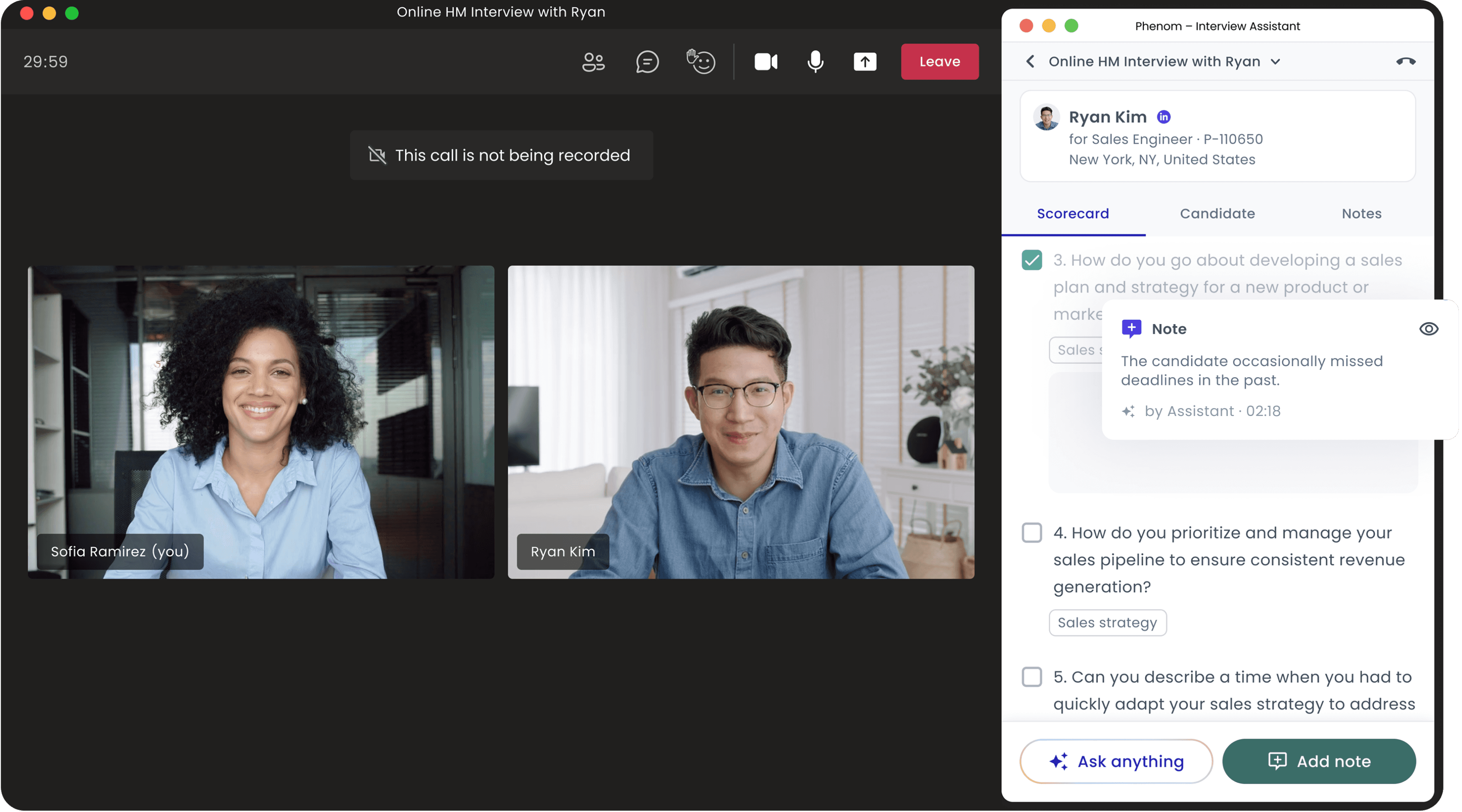
The AI Assistant is an interview companion used by recruiters and hiring managers during live candidate interviews. It generates real-time notes and structured insights. Originally, the assistant relied on recording the interview to generate AI-powered summaries and structured evaluation outputs.
Problem
Because AI insights relied on recorded interviews, 38% of sessions lost access to the assistant when candidates declined recording limiting adoption and undermining feature value.
I led the design of a recording-independent AI workflow that preserves privacy while maintaining real-time insights.
The core insight was that candidates opting out were primarily concerned about their data and audio being stored. If we could remove persistence while preserving intelligence, we could unlock those sessions without compromising privacy.
AI insights were generated only after the interview ended, using the audio recording as input. No recording meant no AI – a binary, unrecoverable loss of value for the recruiter.
AI now operates directly on the live transcript during the interview. No audio stored. No recording required. Full AI capability maintained regardless of candidate consent to record.
Working closely with the legal and compliance team, we confirmed the architecture of live transcript and real-time notes from it’s viable and offer a strong privacy guarantee.
01.
A real-time transcript is generated and processed instantly.
02.
AI produces structured notes aligned to pre-defined interview questions and competencies in real time.
03.
Recruiters can add or edit notes directly within the assistant. No raw audio is recorded or stored.
Solution
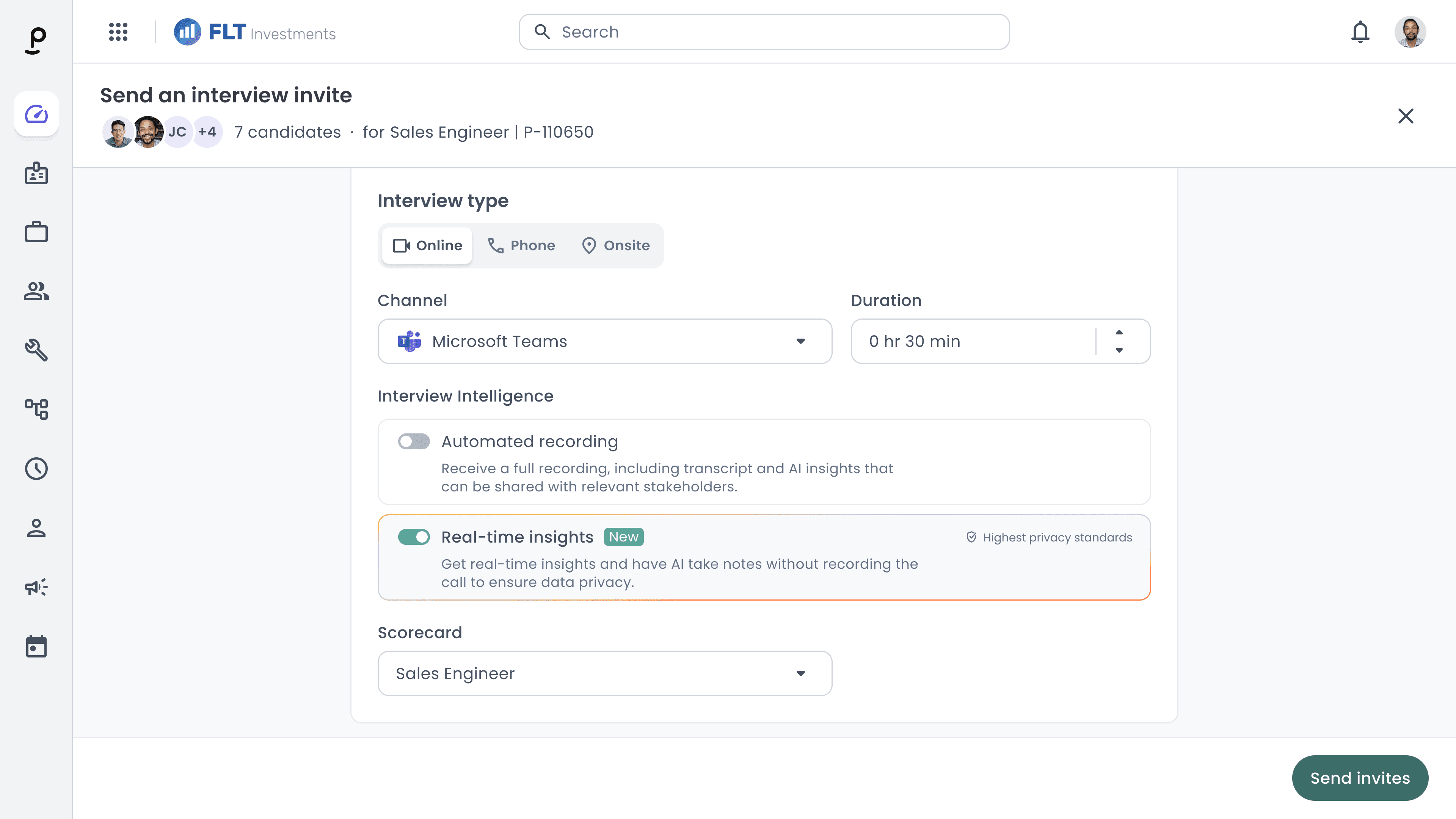
Recruiters now choose between Automated Recording (full transcript + recording stored) or Real-time Insights (AI notes without recording) giving both the recruiter and candidate confidence before the session begins.
Solution
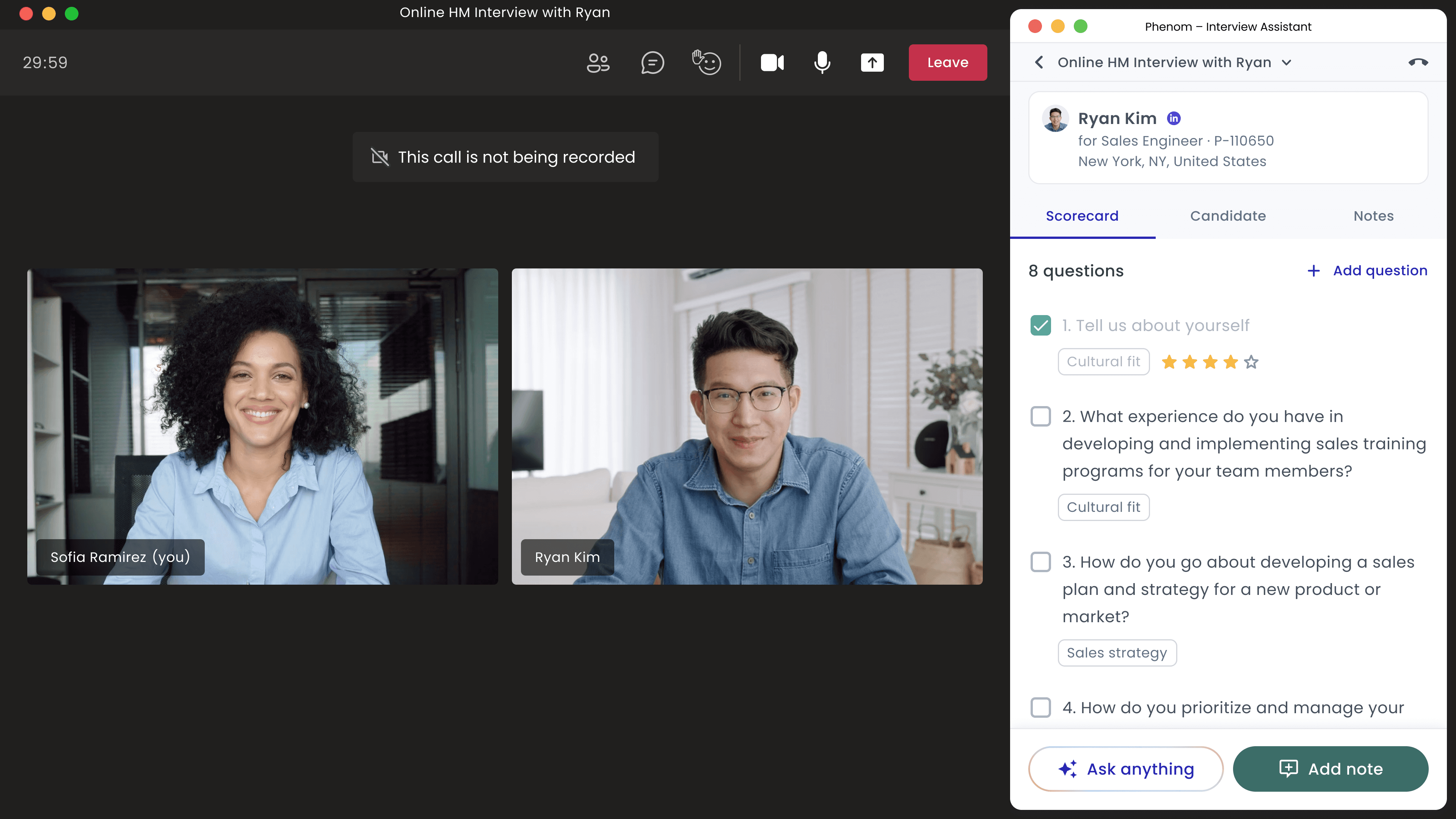
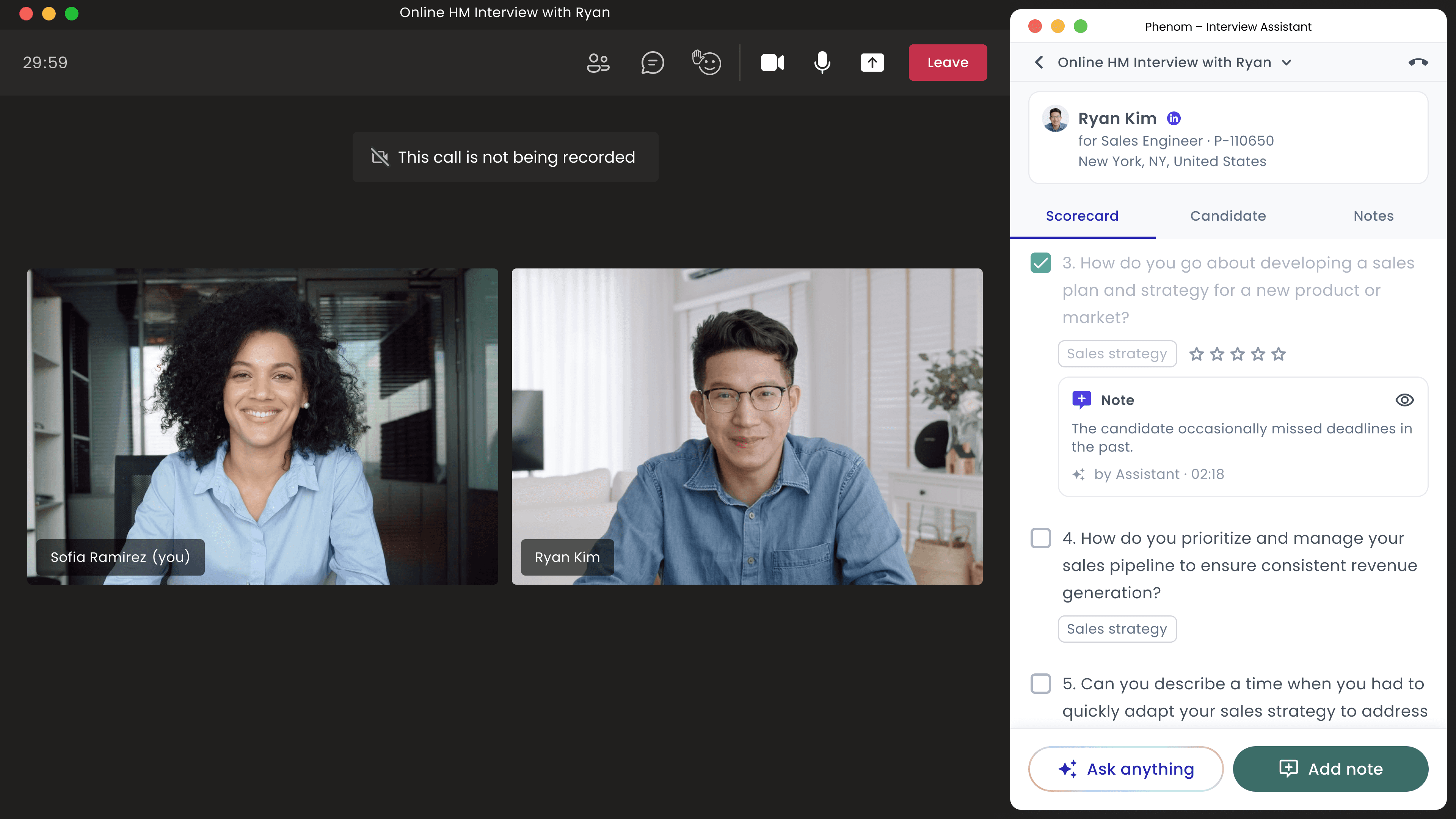
To ensure insights were meaningful and not random, we anchored real-time AI notes to the prepared by hiring team questions. The system analyzes the live transcript and maps candidate responses to specific competencies and prompts, surfacing contextual notes instead of disconnected summaries. This keeps AI output structured and relevant.
Solution
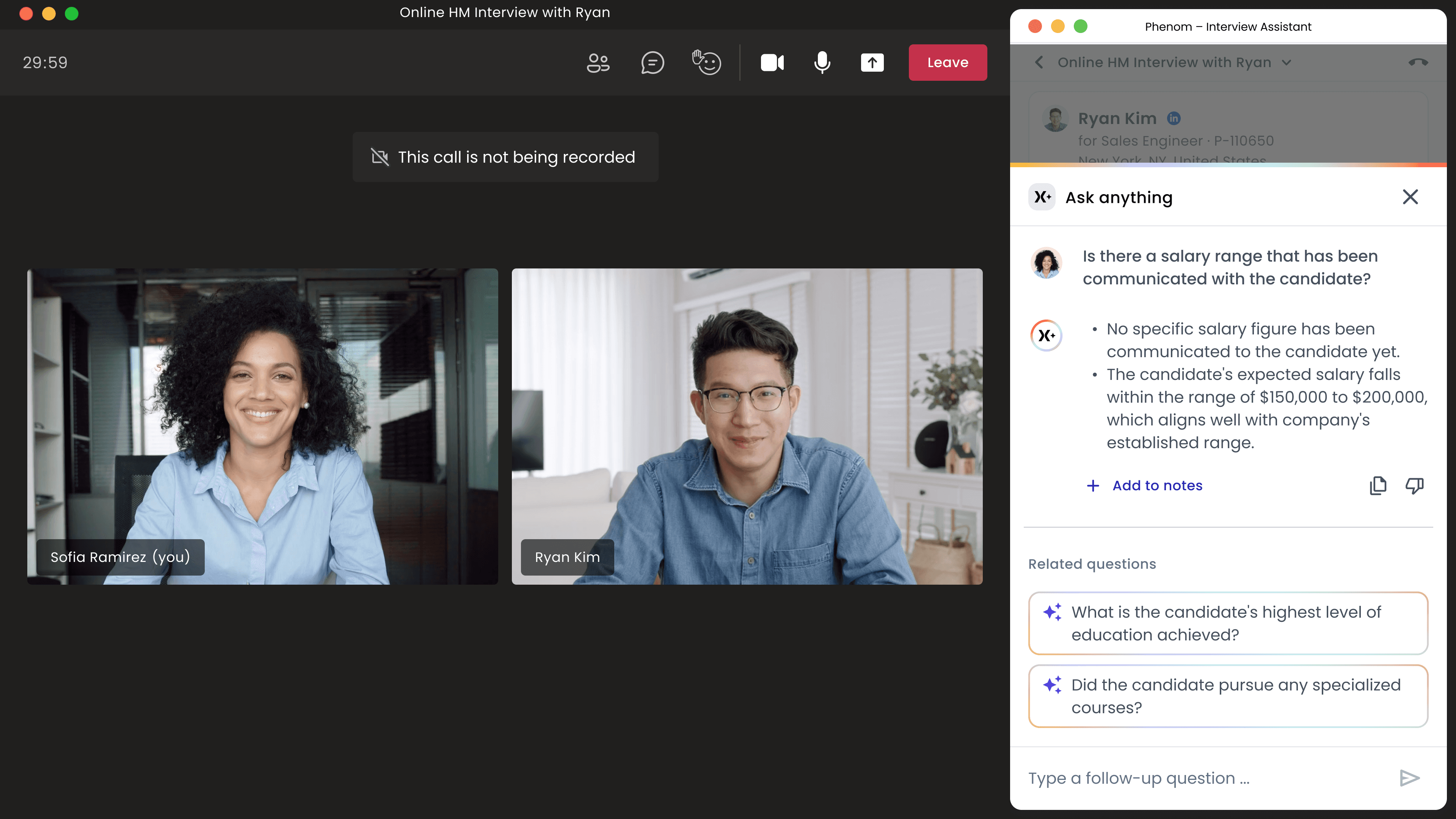
Recruiters can query the assistant at any moment during the hiring process (before, during, or after the interview) without leaving the workflow. By combining real-time conversation data with previous candidate materials, the assistant provides grounded, role-specific responses. It can be saved directly into structured notes, ensuring insights are captured without disrupting the conversation.
Solution
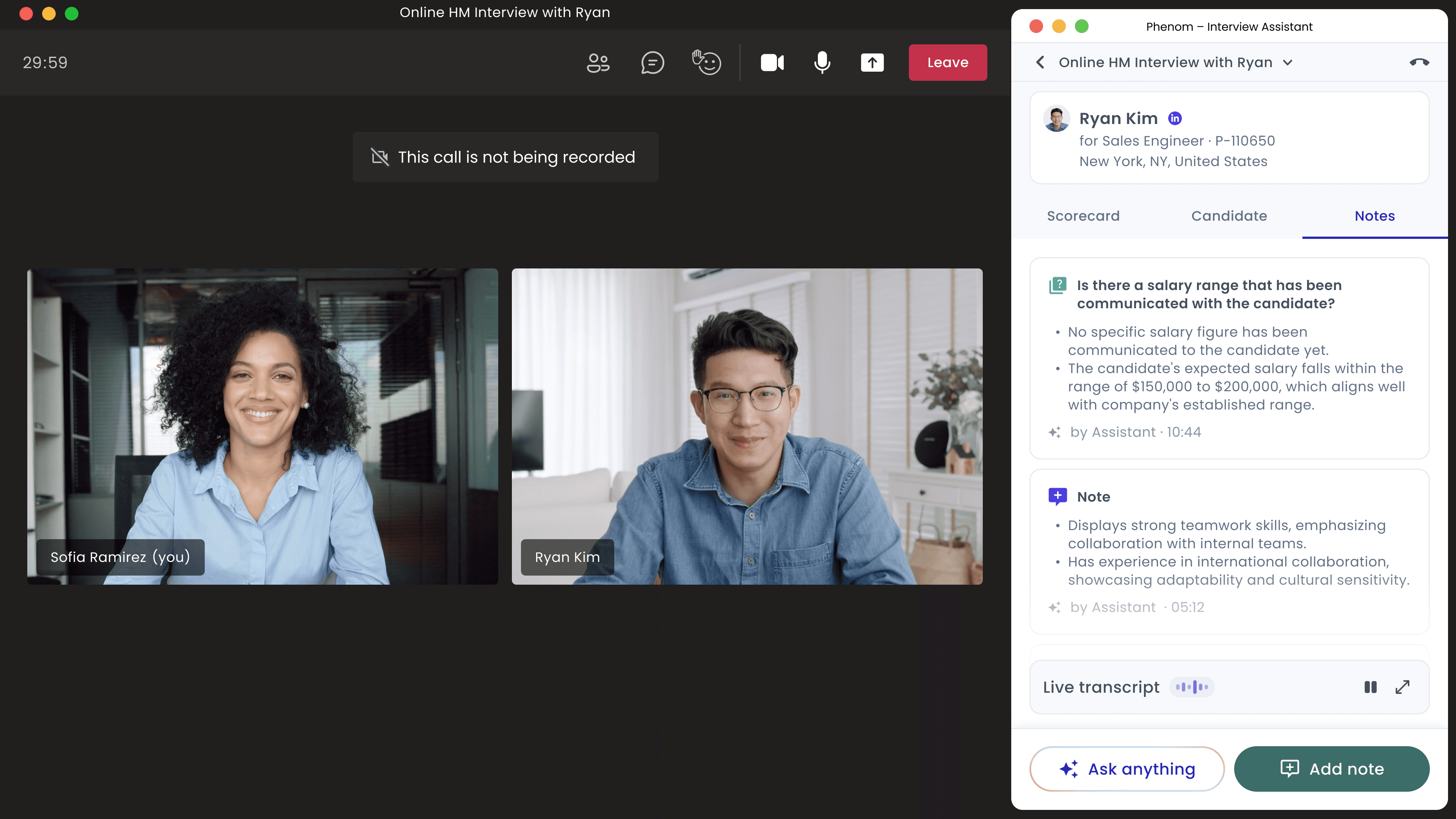
AI notes, recruiter manual notes, and saved AI responses appear in a single timestamped feed creating a complete interview record without storing video.
Solution
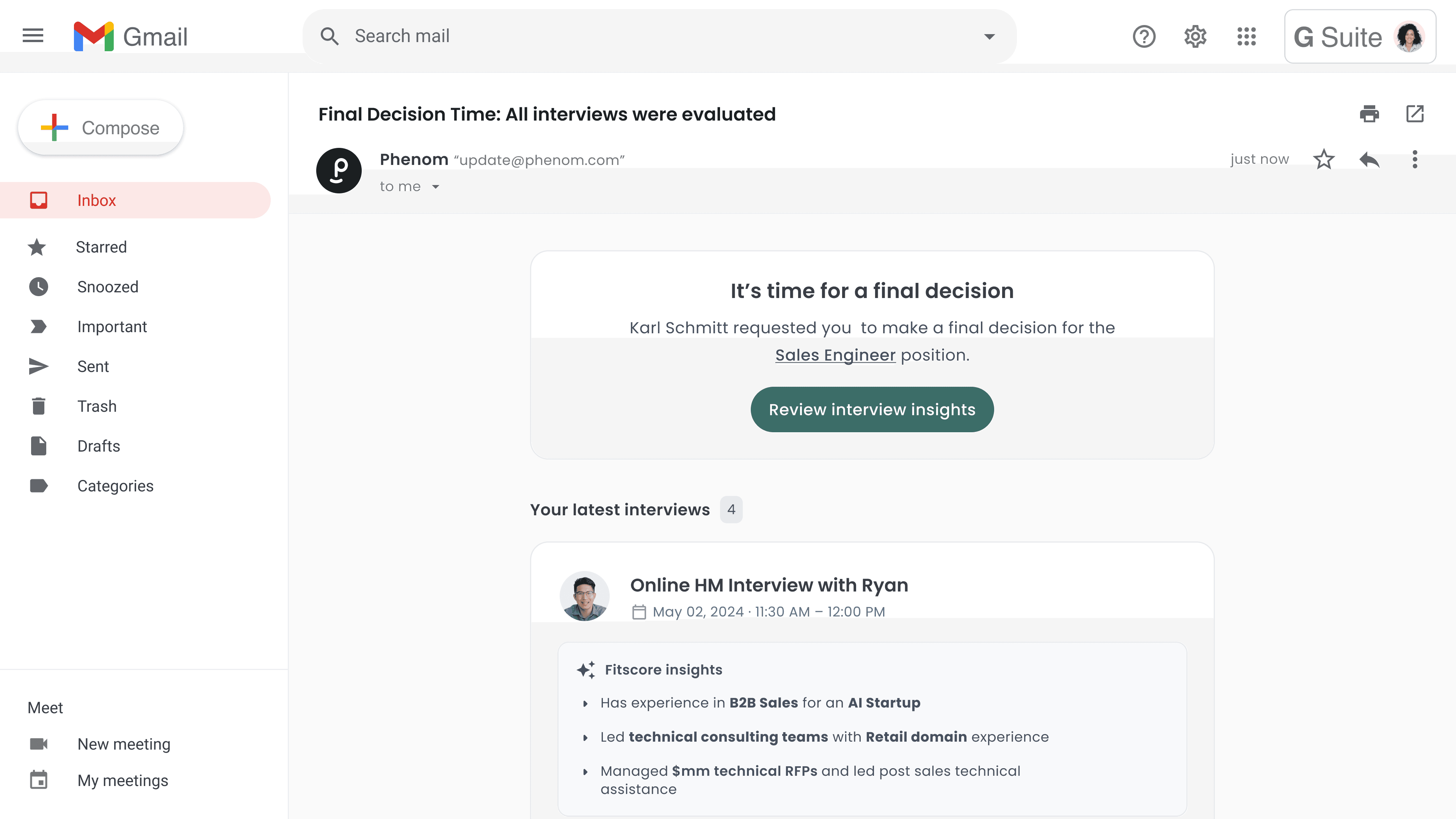
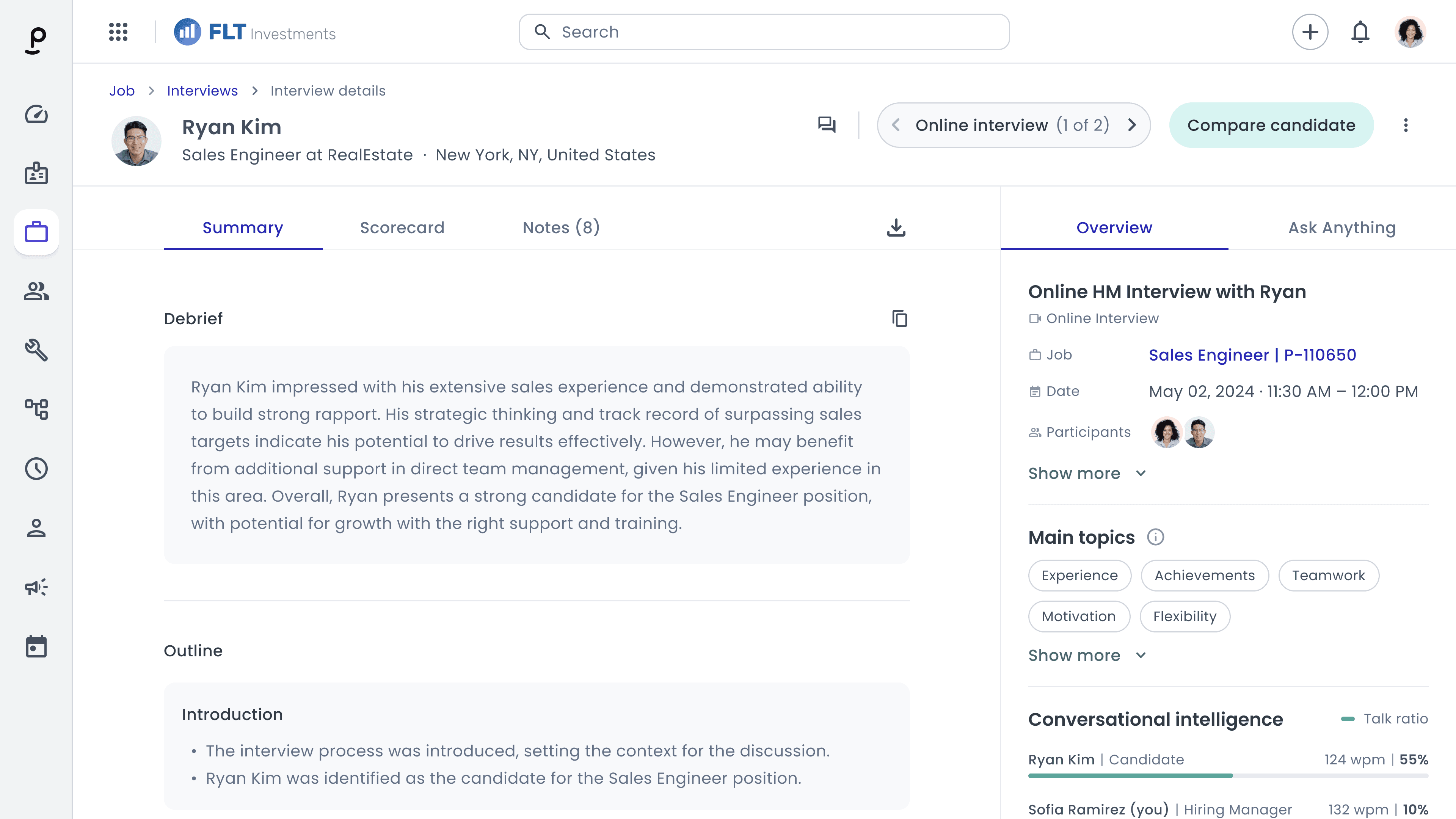
After the session, the assistant automatically generates a structured debrief derived entirely from the live transcript. The system transforms the real-time conversation into a comprehensive summary that reflects the flow of the interview and aligns with the predefined evaluation criteria.
28%
Increase in overall AI feature adoption and a 18% improvement in 30-day retention among AI Assistant users.
33%
Decrease in privacy-related complaints and a measurable increase in candidate consent for AI-enabled interviews.
16%
Increase in enterprise deal closures in privacy-sensitive markets